ONE ARCHITECTURE · MANY MISSIONS
Scene-first intelligence at the edge.
Tectum understands objects in context, including their roles, relationships, activity, and surroundings. One scene-first architecture turns sensor data into useful intelligence across missions, environments, and imaging modalities.
01 · THE EXISTING GAP
Object-centric pipelines lose the meaning of a scene.

Traditional vision systems begin by assigning objects a fixed label, then pass those labels through a series of separate models to add detail. That linear process can recognize what is present, but it struggles to understand roles, relationships, and activity across the wider scene. Because context arrives only after detection, it cannot flow back to refine what an object is, how it should be tracked, or why it matters. Each added stage increases compute and integration work while the underlying view of the scene remains fragmented.
THE SCENE-FIRST APPROACH
Context improves detection, tracking, and interpretation.
Tectum builds a shared representation of the full scene rather than treating every object as an isolated label. Information moves forward from detection into contextual reasoning and back from scene understanding into detection and tracking. The system can therefore refine identity, maintain relationships, and reason about activity over time.
DETECT
LOCALIZE
TRACK
RE-ID
HAND-OFF
GATE
SELECT
DESCRIBE
02 · CORE CAPABILITIES
Scene understanding
Interpret objects, people, activity, relationships, and surrounding features together.
Detection and tracking
Locate and follow entities while preserving the context needed to understand what they are doing.
Rapid enrollment
Add targets, roles, or conditions of interest from a small set of examples.
Cross-camera continuity
Maintain identity and context as entities move between sensors and platforms.
On-board autonomy
Run perception and contextual analysis without continuous cloud or ground-station access.
Structured reporting
Produce machine-readable descriptions of entities, relationships, events, and changes over time.
03 · APPLICATIONS
AUTONOMOUS SYSTEMS
On-board intelligence for low-connectivity and denied environments.
Tectum gives UAVs, UGVs, USVs, and UUVs the ability to interpret scenes and act on sensor data directly on the platform. It supports persistent ISR, wide-area search, convoy monitoring, route awareness, battle-damage assessment, and coordinated operations when bandwidth is limited, links are intermittent, or access to a ground station is unavailable.
WILDFIRE RESPONSE
Context-aware detection for wildfire operations.
Developed with fire-protection engineers from the University of Maryland through the XPRIZE Wildfire competition, Tectum distinguishes active threats from drills and normal activity, evaluates risk to people and infrastructure, and reports the context responders need.
>95%
context-aware detection accuracy
24/7
autonomous awareness
>50% less
false positives by design
INFRASTRUCTURE MONITORING
Persistent monitoring for critical infrastructure.
The same on-board architecture monitors transmission corridors, substations, rail systems, and remote facilities. It provides persistent detection without the compute demand or connectivity assumptions of cloud-dependent systems.
// FIELD CAPTURE · INFRASTRUCTURE PROTECTION
SAR INTELLIGENCE
Scene understanding for synthetic aperture radar.
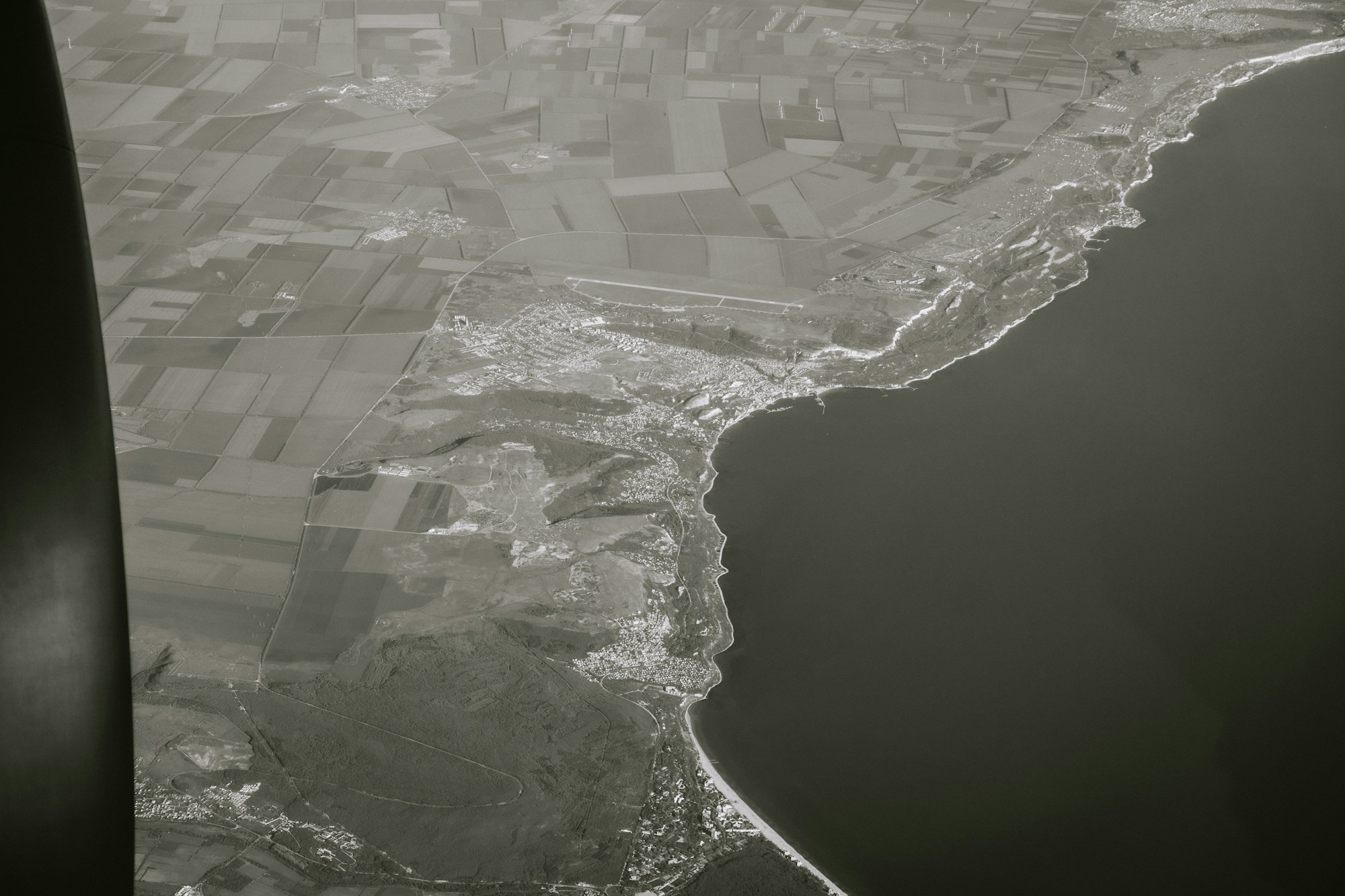
Tectum is natively multimodal, and even works with non-camera imaging. Synthetic aperture radar works through weather, at night, and over difficult terrain, but is notoriously difficult to read. SARgon-ViT, developed by Norden Labs, plugs into the same shared architecture so SAR detections, scene structure, change, and plain-language reporting can contribute to the common operating picture.

// SARGON · ONE MODALITY, SHARED TECTUM ARCHITECTURE
04 · NATIVE MULTIMODALITY
SARgon-VLM
Tectum is natively multimodal. Modality-specific visual encoders plug into the same shared architecture and contribute to one operating picture. Fitting Tectum with SARgon-ViT produces SARgon-VLM, a complete vision-language model for SAR scene understanding.
TECTUM + SARGON-VIT · SAR VISION-LANGUAGE MODEL
IR and future modalities
Infrared support is included out of the box alongside EO. Additional imaging modalities can be added through specialized encoders without rebuilding the underlying Tectum architecture, allowing new sensor data to fuse into the same contextual representation.
EO · IR · SAR · MORE MODALITIES TO COME
SARGON IN PRACTICE
SAR scene understanding on the shared Tectum architecture.
In claim-level evaluation, SARgon-VLM recovered more correct scene structure than the tested general-purpose frontier models while applying stricter controls on unsupported claims.
#1
SAR scene-structure recall vs. frontier AI models
24/7
day, night, all weather
✓
On-board ready

05 · OPERATIONAL BENEFITS
Use compute only when the scene requires it.
A shared scene representation supports richer analysis without running a separate model for every question. Tectum continuously evaluates the scene and allocates additional analysis when a target, relationship, or condition of interest appears. This reduces standby compute by up to 23× while keeping decision latency below 50 milliseconds.
48%
fewer hallucinations during contextual enrichment
480ms
complete contextual enrichment median latency, 2x faster than standard
0
additional encodes required
ADAPTATION OVER TIME
Add new concepts and establish patterns of life.
Operators can enroll targets, roles, and conditions of interest from a handful of examples. Because identity, context, and relationships persist across observations, Tectum can also establish recurring activity, detect changes from normal behavior, and support pattern-of-life analysis without rebuilding the entire perception stack.
ROBUSTNESS IN OPERATION
Recover as operating conditions change.
Models that perform well in a fixed benchmark can degrade when illumination, weather, motion, compression, or sensor characteristics shift. Tectum monitors its own representation on board, detects drift as it occurs, and can recalibrate from as few as six frames. The same scene model can continue operating across day and night, EO and IR, and degraded imagery without replacing the perception stack.
3x
more resistant to signal noise than traditional CNNs
6 frames
recalibration time during sensor transitions
Live
continuous representation drift monitoring
06 · DEPLOYMENT
Deploy as a complete stack or alongside existing models.
Tectum · Standalone
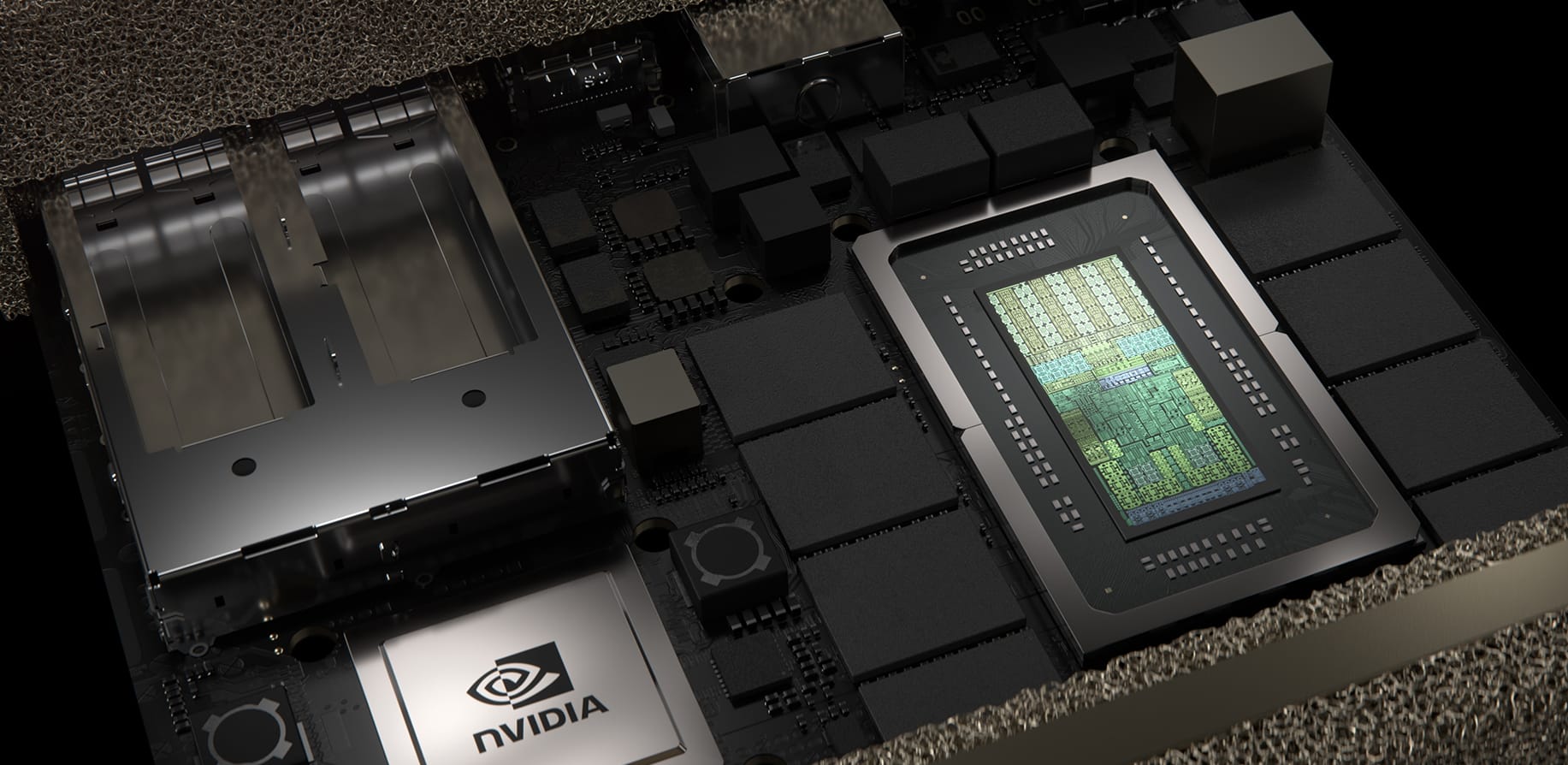
For most deployments, this is the whole system. Detection through description on one encode, real-time under 15 W on Jetson-class modules. The smallest models run on a Jetson Orin Nano.
ALONGSIDE EXISTING MODELS
Tectum · Hybrid
Where a trained detector already earns its keep, Tectum pairs with it. Your models stay, and enrollment, selection, and description ride the same shared encode.
// EDGE MODULE · <15 W REAL-TIME